Broken Arrow, OK · Tulsa metro
Broken Arrow Wood Flooring: Hardwood installation, refinishing and floor repair
Broken Arrow Wood Flooring is the wood flooring contractor Broken Arrow homeowners and businesses call for hardwood installation, refinishing, and repair. Your floors might be scratched through the finish, cupping near an exterior door, creaking underfoot, or simply stuck in another decade. Either way, we tell you what’s wrong and what it takes to fix it.
Whether you’re on a concrete slab in a newer subdivision or have original hardwood under carpet near the Rose District, we match solid or engineered hardwood to your subfloor, room use, and Green Country humidity. Choose from white oak, red oak, hickory, maple, and walnut, with an itemized price and schedule before work begins.
Request a quote
Tell us about the space and we’ll follow up to talk through species, finish, and an itemized price.
Residential wood flooring in Broken Arrow, OK
Every room in a Broken Arrow home asks something different of its floor. We match species, construction, and finish to the job each space does, from the kitchen that sees spills to the staircase that takes every step of the day.
-
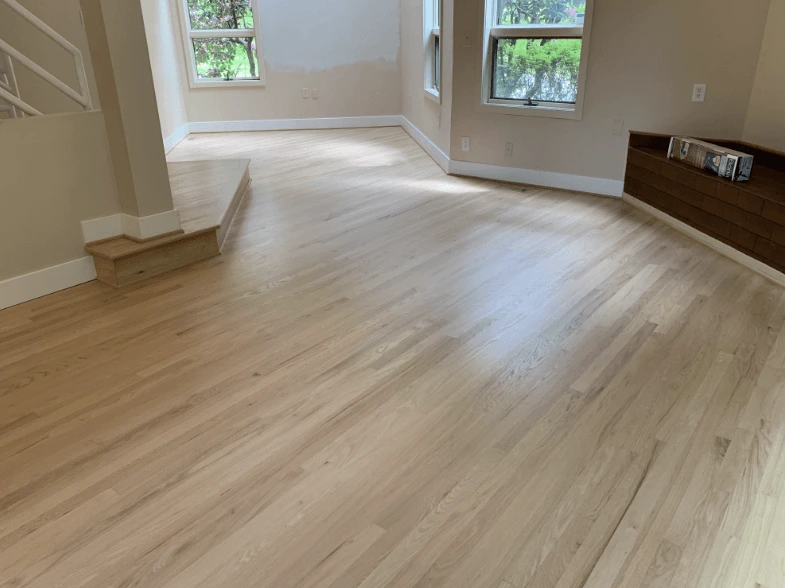
Living room wood flooring
Your living room is where the floor gets judged, and where it takes the most abuse. We install hickory, white oak, and engineered hardwood that stand up to kids, dogs, and sectional sofas, in plank widths that make an open floor plan feel even bigger. Low-sheen finishes hide paw prints. We level the subfloor and fit transitions to tile or carpet so every edge looks deliberate.
-
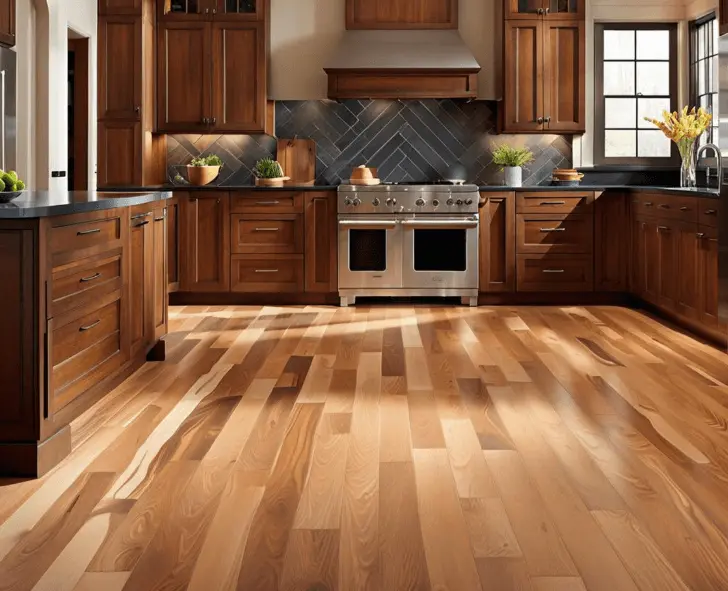
Kitchen wood flooring
Kitchen floors deal with dropped pans, dishwasher drips, and constant traffic between the fridge and the island. Engineered hardwood with a hard factory finish is our go-to here, because its layered core resists the moisture swings that make solid planks cup. We lay out every board around cabinet runs and appliance openings, so your remodel and your floor finish together.
-
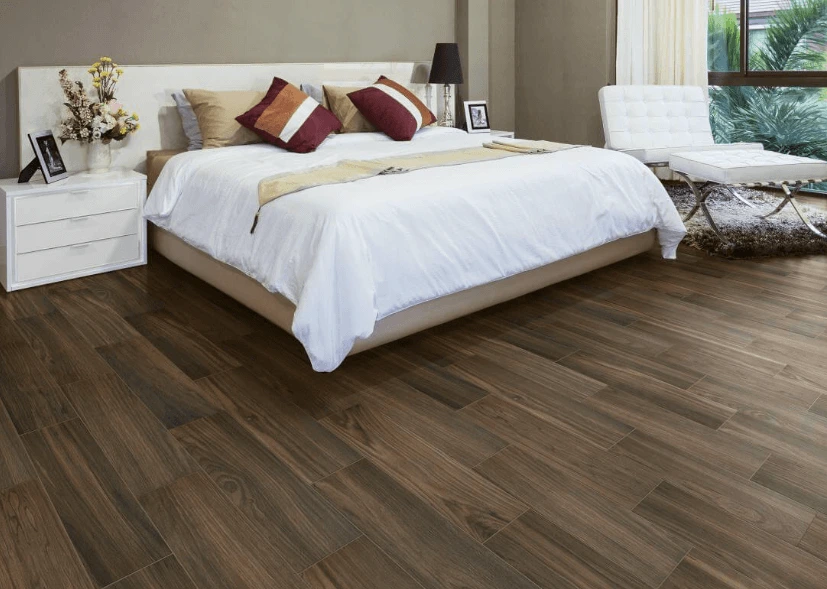
Bedroom wood flooring
Bedrooms are where wood flooring gets to be quiet and warm. Walnut-toned stains, soft white oak, and clean maple pair with area rugs and upholstered furniture without competing for attention. On slab foundations we recommend engineered planks. Over wood subfloors, solid hardwood gives you a floor that can be sanded and refinished for years to come.
-
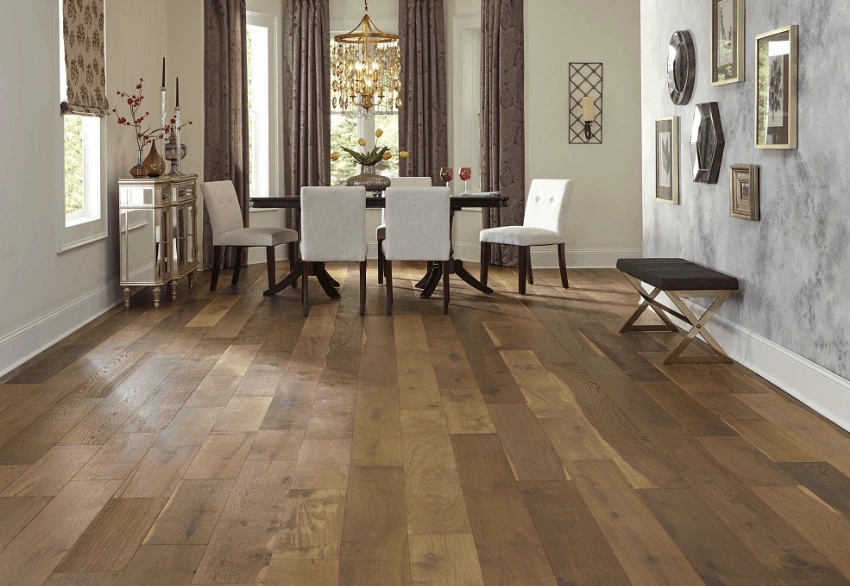
Dining room wood flooring
Chairs slide back and forth at every meal, so dining room floors need a finish that shrugs off scuffs. We favor satin and matte sheens on oak or hickory, and we can run the same flooring straight into the kitchen or living room for one seamless look. For a more formal room, ask about border inlays, wider planks, or a stain matched to your trim.
-
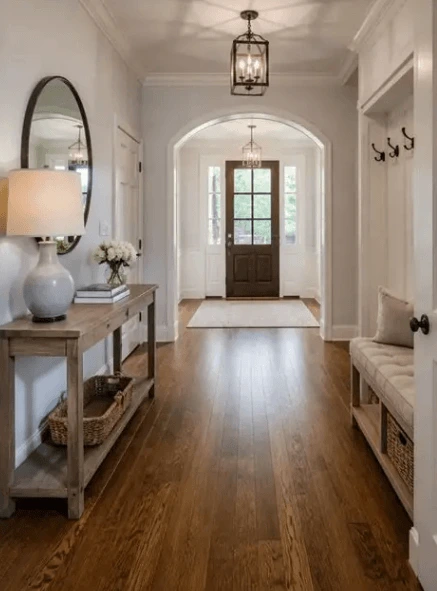
Hallway and entryway wood flooring
Entryways catch mud, rain-soaked shoes, and grit tracked in from the driveway. That’s why we steer these areas toward hard species like hickory, white oak, and maple, sealed with a finish built for frequent cleaning. Reducers and T-moldings keep height changes flush at every doorway, and the right plank direction can make a narrow hallway feel wider.
-
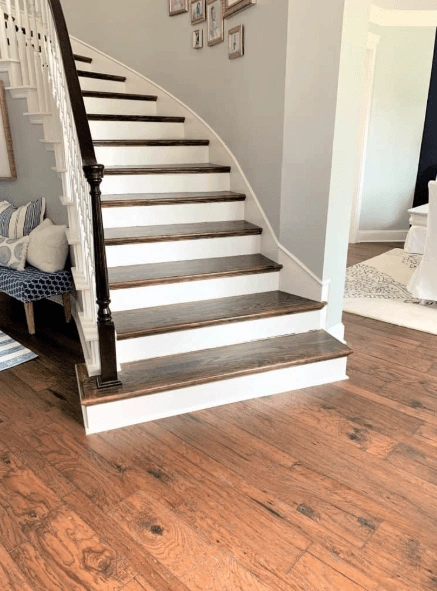
Staircase wood flooring and stair treads
Stairs are the first thing guests see and the hardest-working part of the floor. We build out treads, risers, nosing, and landings in solid or engineered wood that matches the surrounding hardwood. Then we fasten every tread so nothing flexes or squeaks. Stained treads over painted risers remain a favorite contrast, and we can match handrail and trim stain too.
Commercial wood flooring
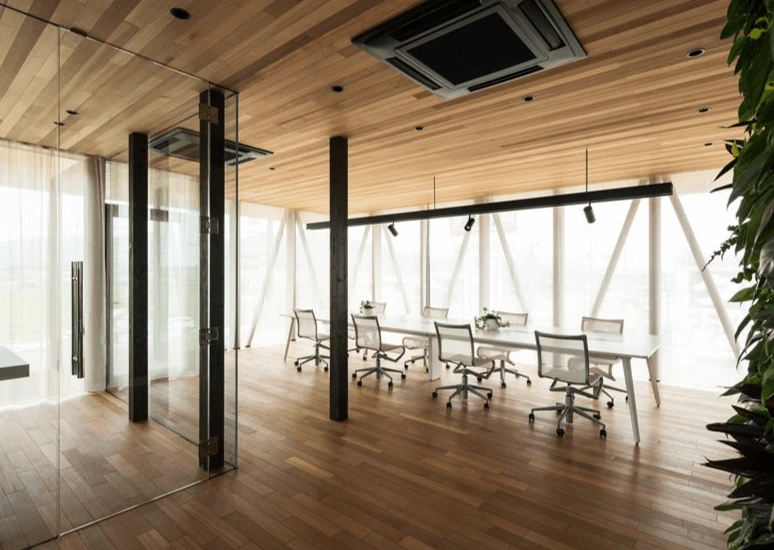
Offices, retail shops, restaurants, and clinics across Broken Arrow need wood floors that survive rolling chairs, heavy foot traffic, and daily cleaning crews. For most commercial jobs we recommend engineered hardwood. Its cross-layered construction stays dimensionally stable as building HVAC systems cycle on and off, and it can go directly over the concrete slab most commercial buildings sit on. Commercial-grade flooring also differs from residential products in a few important ways: a thicker wear layer, harder species, and a heavier factory-applied finish designed for constant use. Before recommending a product, we test slab moisture, check flatness, and review how the space will be used, so the floor fits the business rather than the other way around.
Specialty wood flooring services
Our specialty services cover the whole life of a wood floor, from a light screen-and-recoat to a full sand-down, board replacement, or new installation. Every recommendation starts with the condition of the existing floor and the subfloor underneath it.
-
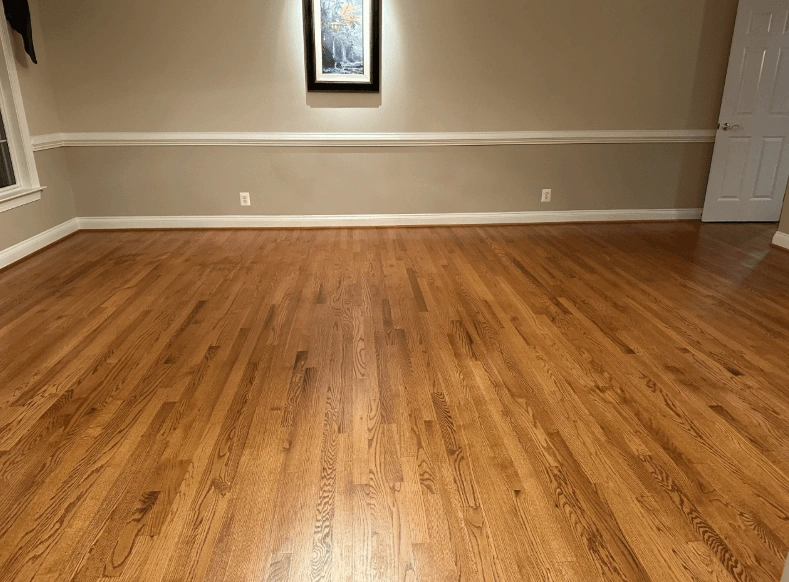
Hardwood floor refinishing
Refinishing brings back floors that have gone gray in the traffic lanes, lost their sheen, or picked up years of fine scratches. The process strips the worn coating and a thin layer of wood so a fresh finish can bond to clean, even boards.
We check the floor before sanding. That means remaining board thickness, exposed nail heads, gaps, cupping, loose boards, and signs of past patchwork. Where boards are unstable or water-damaged, repairs come first so the new finish isn’t sitting on a problem.
Then we help you choose a finish. Sheens range from matte and satin to semi-gloss and gloss. The choice between water-based and oil-based polyurethane affects color warmth, drying time, and odor during the project.
-
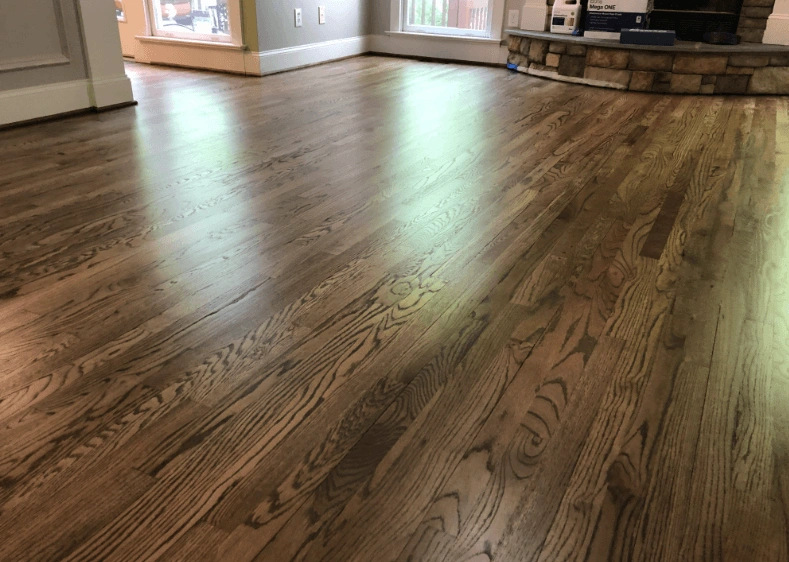
Hardwood floor sanding and staining
Sanding flattens the floor and removes old finish, surface stains, and light damage. We work through progressively finer grits so the wood takes stain evenly and no swirl marks show under the final coat.
Each species reacts to stain in its own way. Red oak absorbs color readily, maple can blotch without careful prep, hickory’s natural contrast shows through most tones, and pine stays softer and more variable. Grain and board-to-board variation also shift the result.
That’s why we put stain samples on your actual floor and look at them in daylight and under your home’s lighting before committing the whole room.
- Light stains keep the wood looking natural and help hide dust.
- Medium stains add warmth while letting the grain show.
- Dark stains create dramatic contrast but show scratches and pet hair more readily.
- Clear finishes seal the wood in its natural color without added pigment.
-
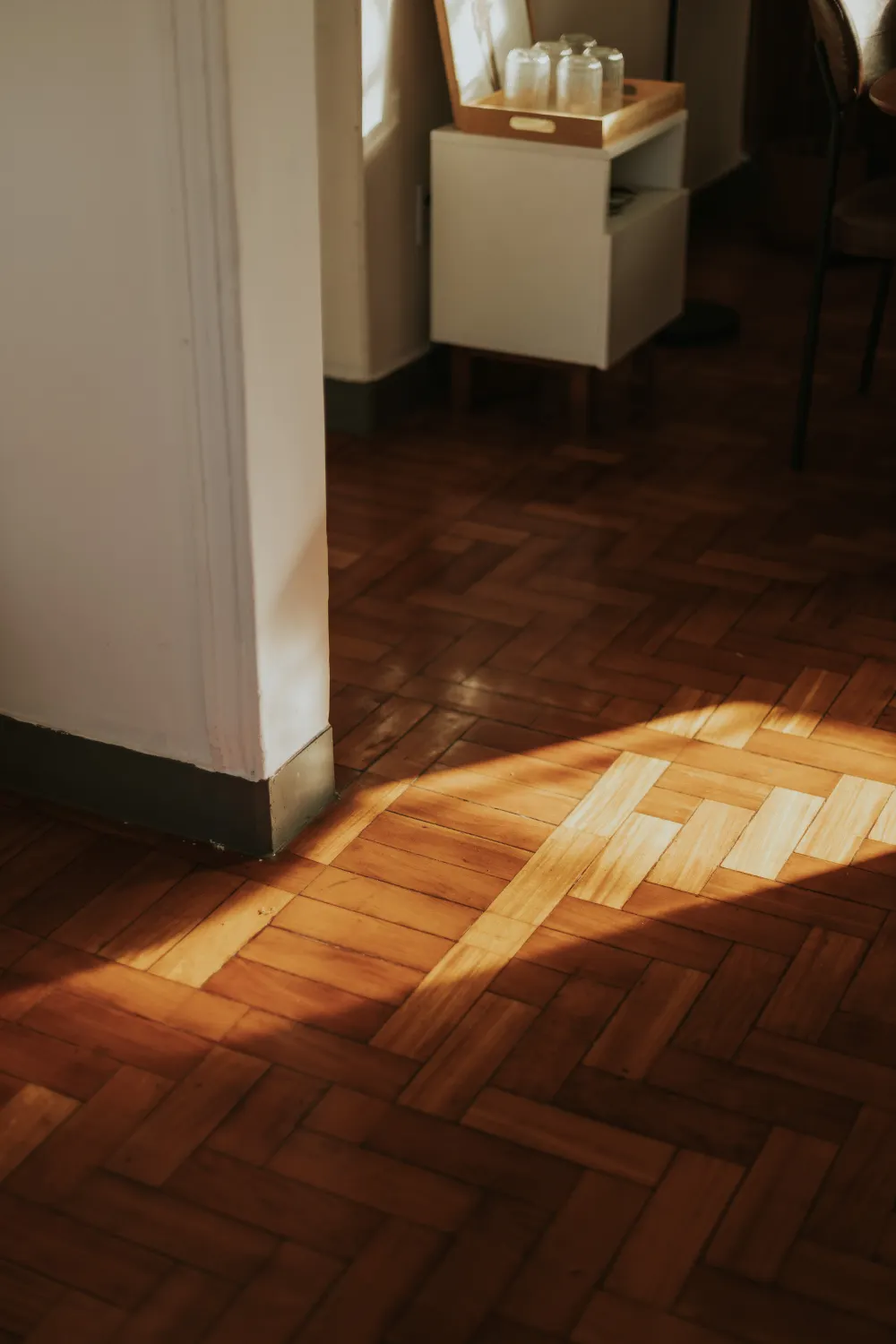
Hardwood floor repair and restoration
Cracked boards, loose planks, deep gouges, squeaks, burn marks, and worn thresholds don’t always mean a new floor. Whenever the rest of the floor is sound, we repair the damaged sections first and blend them into the surrounding wood.
Good repairs start with the cause. If a board failed because of a slow leak, a sagging joist, or fasteners that let go, replacing the board alone just resets the clock. We track down the source before cutting anything out.
Replacement boards are sized to match width, thickness, and tongue-and-groove profile, and laid with the grain running the same direction. On older floors an exact match can be hard to source, so we close the gap with careful board selection, stain blending, and a unified finish.
-
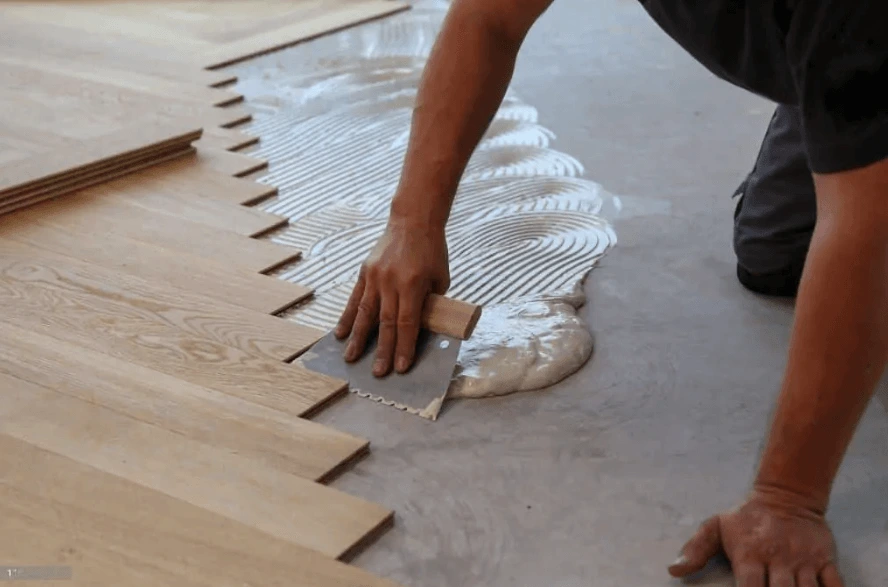
Engineered hardwood flooring installation
Engineered hardwood bonds a genuine hardwood top layer to a cross-laminated core. You get the look and feel of real wood with better resistance to the seasonal expansion and contraction that affects solid boards.
That stability makes engineered flooring a strong fit for the slab foundations found in many Broken Arrow homes, provided the product is rated for it and the slab passes a moisture test. Depending on the manufacturer and the site, we install it glue-down, nail-down, or floating.
We also plan for floor height at doorways, expansion gaps at the perimeter, and trim details so the finished floor can move naturally without buckling or gapping.
-
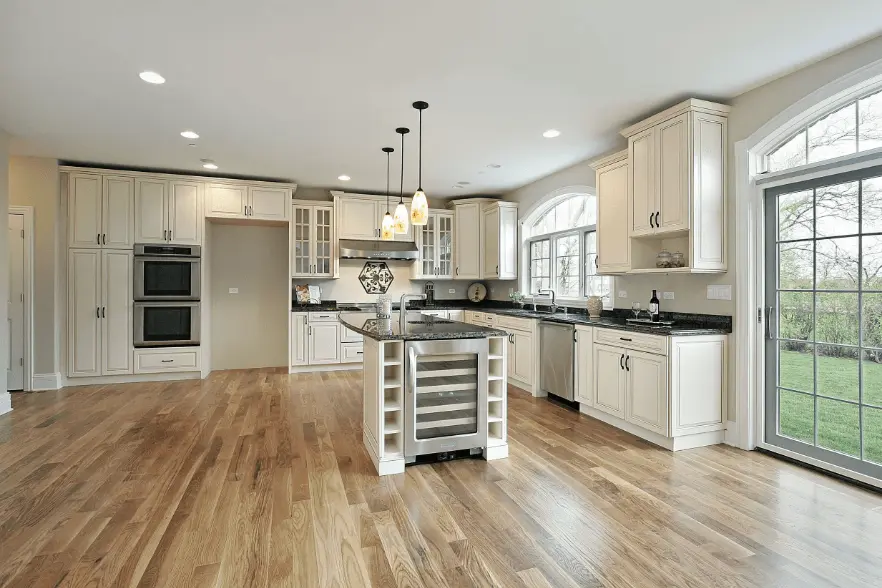
Solid hardwood flooring installation
Solid hardwood is milled from a single piece of lumber, top to bottom. With enough thickness, it can be sanded and refinished several times over its life, which is a big reason many homeowners still prefer it.
It goes down over wood subfloors that we’ve confirmed are flat, structurally sound, and dry. The boards also need time to acclimate to your home’s indoor conditions before installation. That reduces gapping in dry winters and cupping in humid summers.
Species, grade, and board width shape the final look. You can choose unfinished boards stained and sealed on site, or prefinished boards that go in faster.
- Unfinished hardwood — Custom stain color and a seamless site-applied finish
- Prefinished hardwood — Less sanding, dust, and finish odor inside the house
- Narrow strips — Classic, traditional floor pattern
- Wide boards — More visible grain; acclimation is critical
-
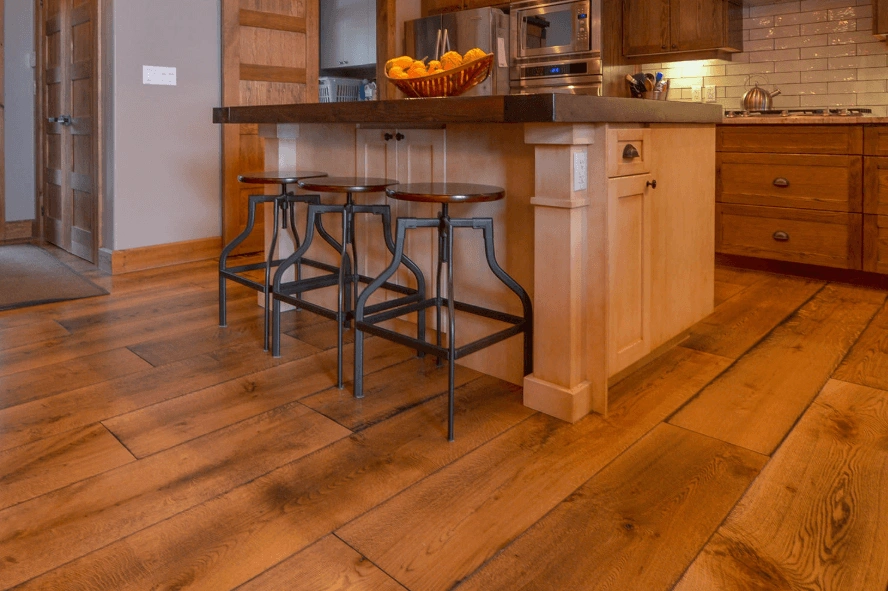
Wide plank and custom wood flooring
Wide-plank floors show off more of each board’s grain and give rooms a calmer, less busy look. The tradeoff is that wider boards expand and shrink more with humidity. Subfloor flatness, moisture readings, and acclimation matter even more than usual.
We’ll help you decide whether a given width makes sense for the room, the species, and your subfloor. White oak, hickory, walnut, and maple each move and wear differently at wider widths.
For custom work we offer herringbone and chevron layouts, mixed-width patterns, borders, inlays, custom-blended stains, and matching stair parts. We settle layout direction before the first board goes down, because it changes how the room reads and how transitions line up.
-
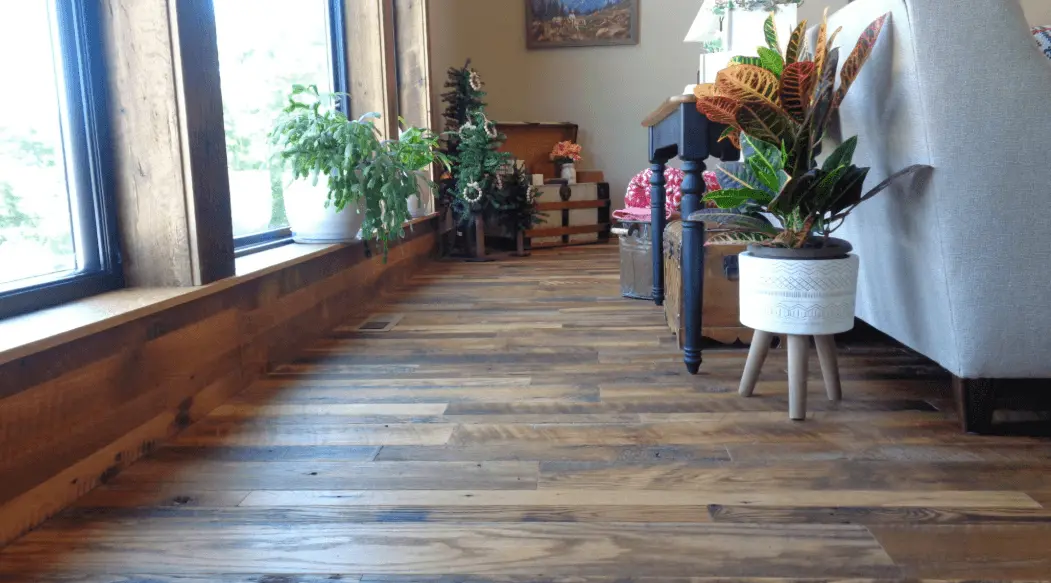
Reclaimed and rustic wood flooring
Reclaimed flooring comes from salvaged lumber, often from old barns, warehouses, and commercial buildings. It carries the marks of its history: nail holes, saw kerfs, mineral streaks, knots, and natural color shifts.
Before any reclaimed board is installed, we check it for hidden metal, insect damage, splitting, and uneven thickness. Most material needs denailing, re-milling, and sorting by length and quality before it’s ready to install.
If you like the look but not the sourcing, you can get rustic character from new wood. Character-grade lumber, wire-brushing, hand-scraping, matte finishes, and stains that let knots and grain show through create the same relaxed feel.
-
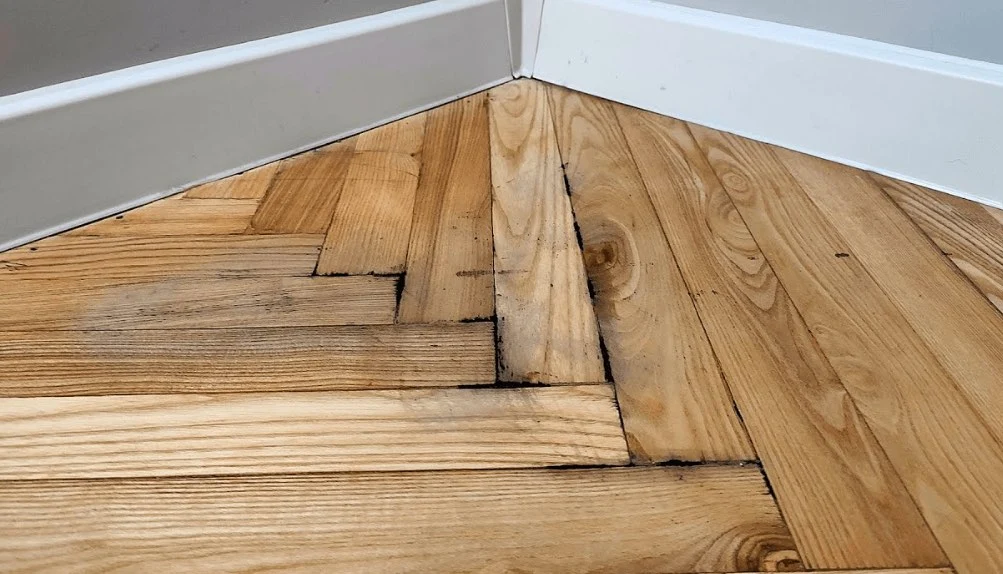
Water and pet damage floor restoration
Water makes hardwood cup, crown, buckle, stain, or pull away from the subfloor. Pet accidents that soak into seams can leave dark stains and lingering odor, especially where the finish has worn through.
We start by confirming whether the moisture is still active and measuring the affected boards. Leaks from plumbing, appliances, or HVAC condensate lines have to be stopped first, because sanding a floor that’s still wet or moving only makes the damage worse.
Mild cupping sometimes settles after controlled drying and spot repairs. Floors with black staining, heavy buckling, delamination, or a damaged subfloor usually need board replacement or a larger restoration.
Once repairs are done, we reseal the area and can suggest finishes that make cleanup easier. Wiping up spills quickly and avoiding wet mops remain the best everyday protection.
-
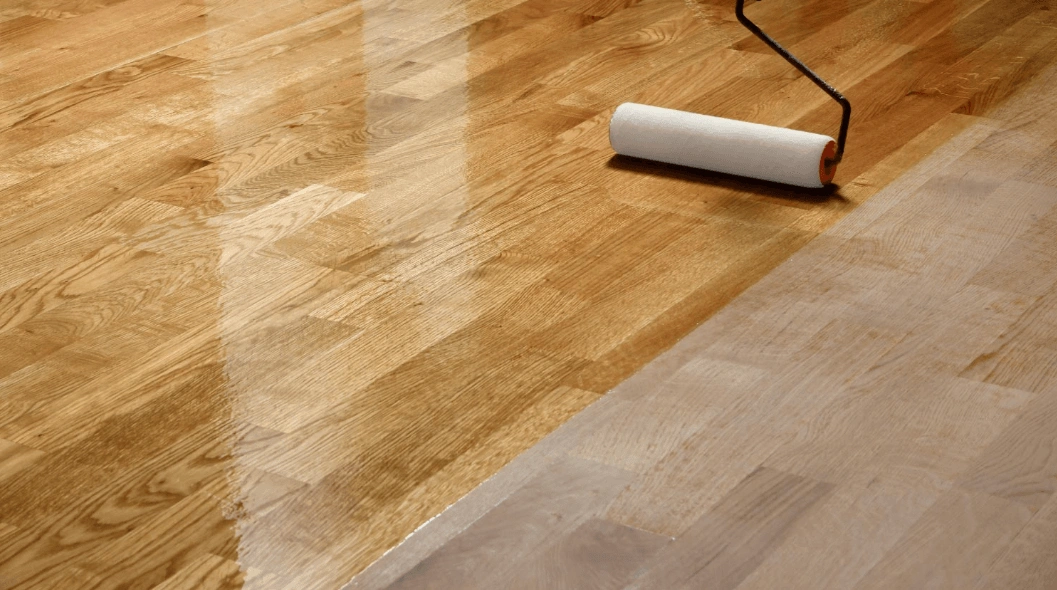
Floor recoating and screen-and-recoat services
Screen-and-recoat is the lighter alternative to full refinishing. We buff the existing finish with a fine abrasive screen, clean away the dust, and apply a fresh protective coat, without sanding down to bare wood.
It’s a good fit for floors with dull traffic lanes and light surface scuffs, as long as the finish hasn’t worn through to raw wood. It won’t remove deep scratches, change the stain color, or fix a peeling or contaminated finish.
Before recoating, we test adhesion and ask what products have been used on the floor. Wax, oil soaps, and silicone-based polishes can keep a new finish from bonding, and floors with that residue may need a different approach.
-
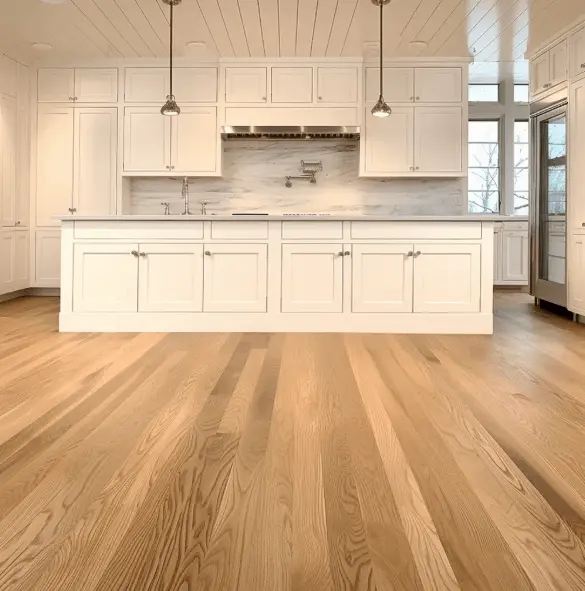
Wood species and color matching
Matching new wood to an existing floor takes more than picking a similar stain. Species, cut, grade, board width, finish sheen, and years of sun exposure all shape how a floor looks today.
Red oak and white oak can take the same stain and come out noticeably different. Maple resists stain and can blotch, while the contrast between hickory’s heartwood and sapwood shows through most colors.
Whenever we can, we test samples in the room itself. Morning light, LED bulbs, paint colors, and cabinet finishes all change how a stain reads, so on-site samples are the most reliable guide.
Our tools include custom stain blending, careful board placement, sheen adjustments, and well-planned transitions. When new wood meets an older, sun-mellowed floor, a close blend is usually more achievable than a perfect match.
Why we’re the best wood flooring company in Broken Arrow
What you get when you hire Broken Arrow Wood Flooring:
-
Start-to-finish service
Selection. Prep. Install. Finish. One team, one plan.
-
Floors planned for Green Country weather
Acclimation and moisture checks built in. Fewer gaps. Less cupping.
-
Honest species selection
White oak, red oak, hickory, maple, walnut. Chosen for your home, not our inventory.
-
Line-item estimates
Materials, labor, and prep listed separately. Nothing buried.
-
Detail-level finish work
Tight seams. Flush transitions. Clean trim lines.
What does our expert wood flooring process involve?
Each project begins with a walkthrough of your space. We check subfloor flatness, take moisture readings, look at the existing floor, and talk through species, plank width, finish, and installation method. From there, the work follows a clear order:
- Delivering flooring and acclimating it to your home’s conditions
- Repairing, leveling, and moisture-protecting the subfloor
- Installing boards with proper expansion space at walls and fixed objects
- Fitting thresholds, stair parts, and trim
- Doing a final walkthrough to check alignment, seams, and edges
Which wood species and materials do we offer?
We offer solid and engineered flooring across a range of species, each with its own grain, color, and hardness. Seeing samples in your own lighting makes the decision easier.
| Material | What sets it apart |
|---|---|
| White oak | Tight grain, neutral tones, takes modern stains well |
| Red oak | Pronounced grain, warm undertones, very stain-friendly |
| Hickory | Bold color variation and exceptional hardness |
| Maple | Fine, smooth grain and a bright, clean look |
| Walnut | Deep brown tones with a refined, upscale feel |
| Engineered wood | Real hardwood surface over a stable layered core |
Cost & budget
Your estimate breaks out material, labor, and prep so you can see where the money goes. What you’ll pay depends on the product you choose, the size and layout of the space, and what we find under the existing floor.
Wood flooring pricing guide
Wood flooring is priced per square foot, with separate line items for the work around the boards themselves. A complete estimate covers the flooring, moisture barrier or underlayment, labor, trim and transitions, and tear-out of any existing floor.
| Line item | Includes |
|---|---|
| Flooring material | Solid, engineered, prefinished, or unfinished boards |
| Labor | Layout, cutting, nailing or gluing, and fitting |
| Subfloor prep | Leveling, repairs, and moisture barriers |
| Trim and transitions | Baseboard, quarter round, thresholds, and reducers |
In the Broken Arrow area, installed pricing generally falls between $6 and $25 per square foot for solid hardwood and $7.50 to $12.50 per square foot for engineered hardwood. Stairs, herringbone layouts, repairs, and specialty species push costs higher, which is why we confirm pricing after seeing the space.
Proudly serving Broken Arrow and surrounding areas
Broken Arrow Wood Flooring serves homes and businesses in Broken Arrow and the surrounding Tulsa metro, handling everything from selection and installation to repair and refinishing.
- Broken Arrow, OK
- Tulsa, OK
- Bixby, OK
- Jenks, OK
- Coweta, OK
- Owasso, OK
Across the area, we work on both ends of the housing spectrum. Older homes near downtown Broken Arrow may have hardwood hiding under carpet or vinyl, while newer builds on concrete slabs call for engineered systems. We check the subfloor and moisture before recommending anything.
Don’t see your town? Reach out to confirm availability. We take on everything from single-board repairs to whole-home installations across the region.
Ready to talk about your floors?
Tell us what the floor is doing now and what you want it to look like. We’ll walk the space, check the subfloor, and put an itemized price in front of you before any boards come up.
Frequently asked questions
Broken Arrow homeowners and business owners bring us questions about cost, timing, species, and whether an existing floor can be saved. Here are straight answers to the ones we hear most.
How much does hardwood flooring installation cost?
Hardwood installation typically costs $6 to $25 per square foot installed for solid hardwood and $7.50 to $12.50 per square foot for engineered hardwood. Where a project lands in that range depends on species, plank width, and how much subfloor work is needed. We give you an itemized estimate after measuring the space, so you know what’s included before work starts.
What affects the total cost of a wood flooring project?
The product you choose is the biggest variable. Budget engineered planks cost far less than wide-plank solid white oak, and hickory, walnut, custom stains, and hand-scraped textures sit at the upper end. Estimates also include a waste allowance, typically 5% to 10% for simple rooms and more for angled walls, closets, or diagonal layouts. For a rough number, multiply your square footage by the per-square-foot range, then add tear-out and any subfloor repairs found on site.
How should I budget for a wood flooring project?
A practical split is 50% to 65% for flooring material and delivery, 20% to 35% for installation labor, and 5% to 15% for prep, trim, removal, and contingency. Hold that contingency for subfloor or moisture issues, which turn up more often in older homes. Using one product across connected rooms also keeps transitions simpler and costs lower.
Is solid or engineered hardwood more expensive?
Solid hardwood generally costs more upfront in material and can take longer to install, but it can be refinished several times over its life. Engineered hardwood is often less expensive to install and is better suited to concrete slabs and seasonal humidity. We compare the full installed cost, since a cheaper plank that needs extra leveling or moisture mitigation can end up costing more.
What hidden costs should I budget for beyond material and installation?
The costs people most often miss are tearing out and hauling away old flooring, leveling or repairing the subfloor, moisture testing and vapor barriers, moving furniture and appliances, trimming doors and pulling baseboards, and stair parts or custom transitions. Concrete slabs sometimes need moisture mitigation before engineered flooring can go down. We list these items separately so you can tell required prep from optional upgrades.
How much does it cost to refinish hardwood floors?
Refinishing hardwood floors typically costs $3 to $8 per square foot. The price depends on how much sanding the floor needs, how many finish coats are applied, and whether boards need repair first. Floors with light surface wear land at the lower end, while floors needing repairs or heavy sanding cost more.
What’s the difference between solid and engineered hardwood flooring?
Solid hardwood is a single piece of wood through its full thickness and can usually be sanded and refinished many times. Engineered hardwood has a real hardwood top layer bonded to a layered core. That construction makes it more stable when humidity changes and suitable over concrete slabs, where solid hardwood usually isn’t recommended.
How long do hardwood floors last?
With regular care, hardwood floors commonly last for decades, and solid hardwood can be refinished multiple times to extend that further. How long a specific floor lasts depends on the species, the finish, the quality of installation, and how much traffic it gets.
How long does wood flooring installation take?
Most installations take two to five working days once the flooring has acclimated and the rooms are cleared. A single room of prefinished flooring usually takes one to two days, a few connected rooms two to four days, and a whole home three to seven days or more. Site-finished hardwood adds several days for sanding, staining, and finish coats.
What happens during a wood flooring installation?
We order and inspect materials, then let them acclimate while the rooms are cleared and your HVAC runs normally. On install days we prep the subfloor, lay the flooring, cut in around the perimeter, and fit transitions. Site-finished floors are sanded and coated afterward. Every project ends with a walkthrough, cleanup, and care instructions.
How long does hardwood floor refinishing take?
Most refinishing projects take three to five days from the first sanding pass to the final coat. Drying and curing times vary by finish type, and you may need to wait longer before moving furniture back and resuming normal use.
What does the hardwood floor refinishing process involve?
We seal off adjacent rooms and clear the space, repair loose or damaged boards, sand away the old finish, fill gaps and imperfections, then apply stain if selected and protective finish coats. We only recommend refinishing when the boards are sound and have enough wood left above the tongue to sand.
What’s included in a wood flooring estimate?
We measure every room separately, including closets, alcoves, and stairs, and add a waste allowance for cuts. The estimate breaks out flooring and underlayment, tear-out and disposal, subfloor repair and moisture protection, installation labor and trim, and any refinishing or recoating, so the full scope is easy to review.
Why does subfloor prep and acclimation matter for wood flooring?
Wood flooring needs a clean, dry, flat, stable base, so we check for movement, moisture, and damage, then level, fasten, or add a moisture barrier as needed. Humidity around Broken Arrow changes noticeably between seasons. We acclimate flooring to your home’s normal indoor conditions and verify moisture levels before installing, which helps prevent gaps, cupping, and early wear.
Can engineered hardwood be installed in a basement?
Yes. Engineered hardwood’s layered core handles the humidity and temperature changes typical of basements far better than solid hardwood, and many products are rated for installation over concrete. We test moisture levels before recommending a specific product and installation method.
Can hardwood floors be repaired instead of replaced?
Yes, in many cases. Squeaks, scratches, limited water damage, and individual bad boards can usually be repaired without replacing the entire floor, as long as the surrounding boards are structurally sound. We inspect the floor first to decide whether repair, refinishing, or replacement makes the most sense.
Can hardwood under old carpet be refinished?
Yes, often. Hardwood that has been covered by carpet is usually protected from sun and traffic, though it may have staple holes, tack strip damage, pad residue, or pet stains. We pull back a section, check board condition and thickness, and repair any damage before sanding and refinishing.
What wood species is most durable for hardwood flooring?
Hickory and oak are among the hardest common flooring species and hold up well in busy households. Maple is also a durable choice, while softer woods like pine show dents and wear more easily. We can walk you through the hardness and appearance trade-offs of the species available for your project.
Prefinished or site-finished hardwood: which should I choose?
Prefinished flooring arrives already sealed, so installation goes faster and there’s less sanding and finish odor in your home. Site-finished hardwood is sanded and coated after installation, which gives you more control over stain color, sheen, and a smooth, seamless surface. We can help you weigh both against your timeline and design goals.